So the real question isn’t just, “Is karate worth it?” It’s, “What does your child gain from the hours they’re currently spending on screens, and what could they gain instead?”
Across New Zealand, more families are exploring activities that offer more than just entertainment. They want their children to stay active, develop confidence, make friends, and learn skills that will benefit them long after childhood
Why Parents Are Concerned About Screen Time
If you talk to a few parents, you’ll find they have similar concerns. Kids seem to get bored more quickly, struggle to focus, and often want constant entertainment. These shifts don’t happen all at once. They build up gradually, so it’s easy not to notice right away. Over time, though, many families start looking for ways to help their children connect with the real world instead of spending so much time on screens.
Research from throughout the world and local parenting groups has proven that children who spend more time consuming content than creating, moving, or playing are missing something important.
Parents aren’t just looking for ways to reduce screen time anymore. They’re looking for after-school activities that keep children active, help them make friends, build confidence, and give them something meaningful to work towards.

What Makes Karate Different from Just “Another Activity”
At first glance, karate might seem like just another activity competing for your child’s attention. But many parents quickly realise it is different from most activities children encounter today. Kids today are used to instant entertainment and quick rewards from games, videos, and social media. Karate is different. Progress takes time. Learning new skills means practising, and achievements come from steady effort.
Confidence That Builds Quietly Over Time
Confidence in children doesn’t usually arrive in big, obvious moments. It builds slowly, often unnoticed at first. In karate, that process is visible, but subtle.
A child who feels shy on their first day may gradually become more comfortable participating in class. Skills that once seemed difficult become easier, and simple habits like listening carefully and following instructions start to come naturally. Instructions that require ongoing reminders are automatically followed. There’s no hurry. There’s no need to perform right away. Regular attendance fosters confidence, progress is earned, not given, and it lasts. Parents often notice this shift outside the dojo as well. A child who becomes more willing to try new things. More comfortable speaking up. More at ease in unfamiliar situations.
Discipline in a World Full of Distractions
What Kids Actually Experience in Classes
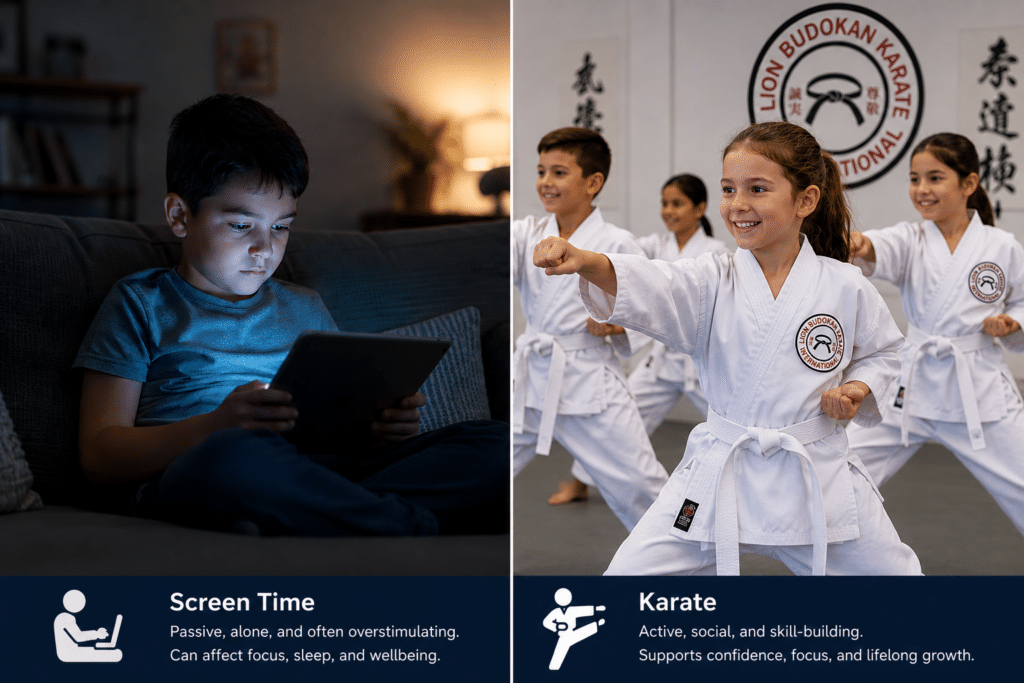
From a child’s perspective, karate doesn’t feel like a solution to screen time. It feels like something entirely different. Karate is tangible, structured, but flexible, and social. When kids train with others, they feel like they’re making progress together. They are inspired to keep going when they see their friends improve. They are given direction and room to develop at their own pace.
The fact that they are totally present in the moment is perhaps most significant. There are no notifications, no switching between tasks, no background distractions. Just a clear focus on what they’re doing. For many children, this kind of uninterrupted engagement is rare and valuable.
| Screen Time | Karate |
|---|---|
| Sitting | Moving |
| Consuming | Learning |
| Alone | Social |
| Instant Rewards | Long-Term Growth |
| Passive | Active |
How to Know If Karate Is Right for Your Child
Karate does not aim to fit every youngster into a predetermined mould. When it fits a child’s requirements and personality, it works best. Some children thrive in structured environments, while others need a little time to adjust and find their confidence. The key is to give it time and see how your child responds rather than expecting immediate results.
- Do they begin to look forward to classes?
- Do they show signs of increased focus or confidence?
- Do they engage more actively, both in and out of training?
These are the indicators that matter.
For many families in New Zealand, karate becomes less about the activity itself and more about what it replaces, and what it builds in its place.
Final Thoughts
Frequently Asked Questions
1. Is karate good for kids in NZ?
Karate is widely chosen by parents in New Zealand as a structured activity that supports physical movement, focus, and personal development in a balanced way.
2. At what age can kids start karate?
Many programs offer an age-appropriate curriculum and pace to accommodate younger kids, beginning with pupils in the 4-5 age range.
3. Does karate help with confidence?
Yes. Many parents notice their children becoming more confident as they progress through karate. Learning new skills, earning belts, overcoming challenges, and training in a supportive environment can help children develop greater self-belief over time.
4. How many classes should kids attend per week?
For most children, attending two or three classes each week provides a good balance between consistent progress and other commitments.
5. Is karate better than other sports for kids?
A distinct form of development is provided by karate, which emphasises discipline, personal development, and methodical advancement. It offers advantages that many traditional sports do not, but whether it’s better depends on the child.