Karate is about more than ability, belts, and organisation. Every class challenges your body and mind, whether you’re practising your first front kick or getting ready for the next grade. While regular exercise promotes strength, discipline, and confidence, what you eat significantly affects your ability to perform well.
Many people, particularly children, go directly to karate after a long day of school. Others hurry from work to evening lessons without appropriate nutrition. It’s understandable if people get fatigued midway through exercise or struggle to focus.
The good news is that you don’t need a sophisticated diet plan to complement your karate training. A few good behaviours and dietary choices may significantly improve your energy, recuperation, and enjoyment of training.
Why Nutrition Matters in Karate
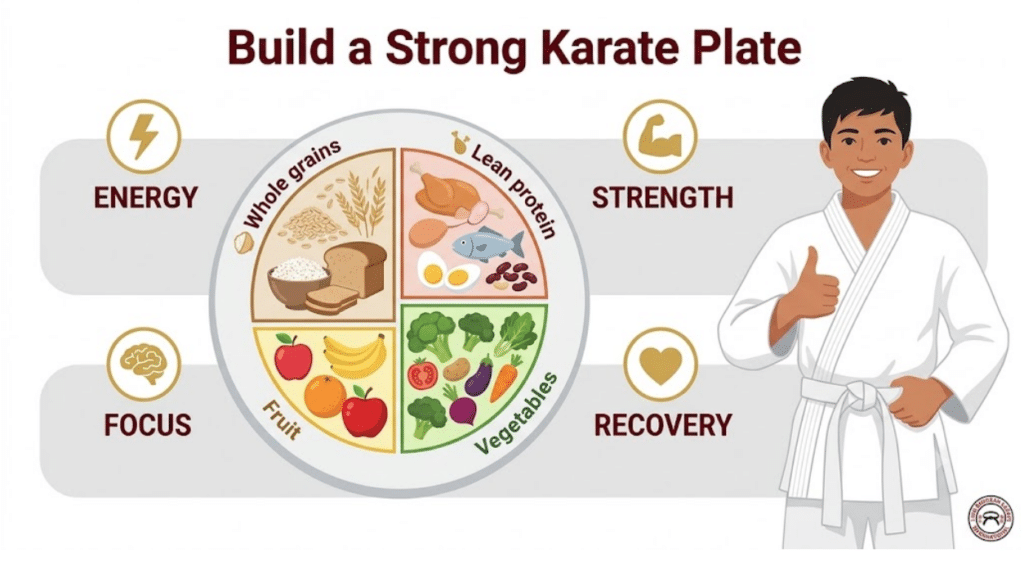
Karate requires a combination of focus, coordination, balance, speed, and endurance. Whether you’re practising basics, learning a new kata, or taking part in sparring, your body needs the right fuel to keep going. Eating well helps you stay energised throughout class, improve concentration while learning new techniques, and recover more comfortably after training. It also supports healthy muscle growth and development, helping you feel ready for your next session.
For younger students, good nutrition also supports healthy growth and helps them stay active both inside and outside the dojo. Think of your body like a car. No matter how good the engine is, it won’t perform well without the right fuel.
What Should You Eat Before Karate Training?
One of the most common mistakes students make is arriving at class either too hungry or too full.
Turning up after a huge takeaway lunch might leave you feeling lethargic, yet exercising on an empty stomach frequently results in low energy and poor attention. A small supper two to three hours before class is typically sufficient. Some excellent choices include:
- Wholegrain toast with eggs
- Chicken and salad sandwich
- Porridge with fruit
- Brown rice with lean chicken and vegetables
- Greek yoghurt with berries
If karate training starts soon after school or work, a small snack around 30 to 60 minutes beforehand is often enough. Easy pre-training snacks include a banana, a handful of nuts, Greek yoghurt, apple slices with peanut butter and wholegrain crackers with cheese.
For children attending after-school karate classes, packing a healthy snack can make a big difference. A child arriving with nothing more than a packet of chips or sugary lollies is unlikely to have the steady energy needed for training. Something as simple as fruit and yoghurt can help them stay focused throughout the lesson.
What to Eat After Karate Class
Training doesn’t finish when you bow off the mat. Your body continues recovering long after class has ended, making your next meal just as important as the one before training. After karate, aim to include:
- Lean protein to help muscles recover.
- Healthy carbohydrates are a source of energy.
- Plenty of water.
Simple recovery meals could include:
- Grilled chicken with rice and vegetables
- Scrambled eggs on wholegrain toast
- Salmon with sweet potato
- Stir-fried beef and vegetables
- Tuna pasta salad
If it’s getting late and you don’t feel like a full meal, a smoothie made with milk, yoghurt, fruit, and oats can be an easy alternative. The goal isn’t to eat perfectly every time; it’s simply to give your body what it needs after working hard.

Staying Hydrated During Training
Water is the most important part of staying hydrated, and it improves your performance. Even modest dehydration can cause fatigue, reduced focus, and impaired coordination when training.
That’s why students should make hydration part of their daily routine, not just something they think about once class begins. Some simple habits include:
- Drink water throughout the day.
- Have a glass of water before leaving for karate.
- Bring a water bottle to every class.
- Continue drinking water after training.
On particularly warm days or during longer training sessions, you may need a little more water than usual. A reusable water bottle is one of the easiest pieces of equipment every karate student should bring to class.
Healthy Snacks for Karate Students
Busy families may not always have time to prepare whole meals before training. Having a few healthy snack options around makes life much simpler. Some practical alternatives include fresh fruits, boiled eggs, cheese and wholegrain crackers, homemade trail mix, yoghurt tubs, wholegrain wraps and also oat-based snack bars with low added sugar.
These snacks give consistent energy without making pupils feel heavy or uncomfortable in class. Planning beforehand also helps to limit the temptation to stop for fast food or sugary snacks on the way to training.
Common Nutrition Mistakes to Avoid
Good nutrition doesn’t need to be complicated, but a few common habits can affect how you feel during karate.
Skipping Meals
Some students think they’ll feel lighter if they don’t eat before class. In reality, this often leads to tiredness, slower reactions, and difficulty concentrating.
Eating Too Close to Training
A large meal just before karate can leave you feeling uncomfortable while moving, kicking, and stretching. Try to leave enough time for your food to digest before class.
Relying on Sugary Drinks
Soft drinks and energy drinks might seem like a quick solution when you’re feeling tired, but the energy boost usually disappears just as quickly. Water remains the best choice for most karate students.
Forgetting Recovery
Training places demands on your body, even if the class doesn’t feel particularly intense. Eating a balanced meal afterwards helps prepare you for your next session.

Simple Daily Habits That Support Better Training
You don’t need a perfect diet to support your karate goals. Often, it’s the small daily habits that make the biggest difference. Try to follow the steps below:
- Eat regular meals each day.
- Include fruit and vegetables with most meals.
- Choose wholegrain foods where possible.
- Drink water consistently.
- Get enough sleep each night.
- Prepare healthy snacks before busy training days.
These practices benefit not just your karate training but also your overall health and well-being. Remember that consistency is much more essential than perfection.
Fuel Your Training One Meal at a Time
Every karate student wants to improve, whether that’s building confidence, learning new techniques, or preparing for the next grading.
Good nutrition isn’t about eating perfectly. It’s about making small choices that help you feel your best each time you step onto the mat. With the right balance of healthy food, water, and regular training, you’ll be giving your body the support it needs to keep improving week after week.
If you’re unclear about what works best for your child or your personal training schedule, don’t be afraid to consult your karate teacher. Every kid is unique, and minor changes may frequently make a significant effect over time.
The goal isn’t to eat perfectly; it’s to build healthy habits that support a lifetime of karate.
Frequently Asked Questions
What should children eat before karate?
A light snack such as a banana, yoghurt, wholegrain sandwich, or fruit with cheese around 30 to 60 minutes before class can provide steady energy without feeling too heavy.
Is it okay to train on an empty stomach?
It is often preferable to have a modest lunch or snack before exercise. Exercising when hungry might make it difficult to concentrate and sustain energy during class.
What is the best drink for karate training?
For most students, water is all that’s needed before, during, and after class. Staying hydrated throughout the day is just as important as drinking during training.
Should karate students eat after class?
Yes. A balanced meal containing lean protein, healthy carbohydrates, and vegetables helps the body recover and prepares you for your next training session.
Do young karate students need supplements?
In most cases, no. Children and recreational karate students can usually get all the nutrients they need from a balanced diet. If you have concerns about nutrition, it’s always best to seek advice from a qualified healthcare professional or dietitian.