Choosing a martial art can feel confusing when you first start looking. One club offers karate, another teaches taekwondo, and a friend recommends Brazilian Jiu-Jitsu. Each sounds promising, but the lessons can look quite different.
Some involve punches and kicks. Others focus on throws or grappling. Even two clubs teaching the same style may take different approaches to beginners, contact and competition.
If you are exploring martial arts in Auckland for yourself or your child, it helps to understand those differences before booking a class.
No single choice is best for everyone. What matters is finding suitable training, good instruction and an environment you want to return to.

Start With What You Want From Training
Before comparing styles, think about why you want to join. You might be looking for practical self-defence, regular exercise or something that gives you a break from sitting at a desk. For your child, the priority might be finding an activity they enjoy while learning coordination and becoming more comfortable trying new things.
Consider the type of training you would prefer, too. Would you enjoy practising punches and kicks? Are you comfortable with close physical contact? Does your child like following a sequence, or do they prefer working through an exercise with a partner?
You do not need definite answers before starting. These questions give you something useful to discuss with an instructor.
Karate: Techniques, Structure and Gradual Progress
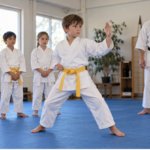
Karate is a Japanese martial art that commonly includes punches, kicks, blocking movements and stances.
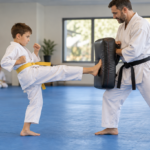
Lessons often combine basic technique practice, kata—a set sequence of movements—and partner exercises. The amount of sparring and emphasis on self-defence applications varies between schools.
For beginners, this offers several ways to learn. Practising alone gives you time to work on a movement. Partner exercises introduce distance, timing and responding to another person.
Children begin with simple movements and build on them as they get the hang of things. Adults start with the basics too, so there’s no pressure to keep up with people who have been training for years.
Karate may suit someone who enjoys structured lessons and a combination of individual and partner practice. Respect and self-control are important parts of many karate schools, although these values are shared across other martial arts too.
Taekwondo: Kicking, Movement and Athletic Challenges
Taekwondo originated in Korea and is particularly known for its kicking techniques.
Training commonly includes kicks, footwork, forms and partner exercises. Punches are also part of taekwondo, although kicking often receives greater emphasis, especially in sporting practice. For someone who enjoys energetic movement, working on a new kick can be an appealing challenge. It requires balance, coordination and practice, not simply the ability to lift a leg high.
Children and adults can begin within their current ability. Flexibility and control are developed over time. Taekwondo may be a good fit if you enjoy kicking and active drills. Ask the club how much its programme focuses on competition, general training and practical self-defence, as the balance differs between schools.
Judo: Throws, Balance and Groundwork
Judo is built around throwing techniques and grappling rather than punches and kicks in ordinary sporting practice.
Students learn how to disturb another person’s balance, move into position and perform techniques under supervision. Learning how to fall is an important part of training. Groundwork also plays a role. Depending on age and experience, lessons can include holds, escapes and other permitted techniques.
Judo involves close contact, so it is worth watching a lesson before deciding whether that suits you or your child. Some beginners enjoy working with a partner straight away; others need more time to become comfortable.
It may appeal to people who enjoy hands-on practice and learning how positioning and timing affect a technique. Physical strength still matters, but students also work on using movement efficiently.
Brazilian Jiu-Jitsu: Positions, Escapes and Grappling
Brazilian Jiu-Jitsu, usually called BJJ, places considerable emphasis on ground grappling.
Students learn how to establish positions, escape from them and use techniques involving control and leverage. Adult training commonly includes submissions, while children’s programmes need age-appropriate rules and restrictions.
A beginner might spend part of a lesson learning how to move out from underneath a partner. Practising with resistance then helps them discover which details make that movement work.
This can appeal to people who enjoy solving a physical problem through repeated attempts. It also involves substantial close contact.
BJJ is often described as a system where technique can overcome strength. Technique can make a significant difference, but size, strength and experience still affect what happens. It should not be presented as a guarantee that a smaller person can control anyone.
Kickboxing: Punches, Kicks and Footwork
Kickboxing brings together punching, kicking and footwork. Classes often include pad work, combinations and conditioning. Some programmes concentrate mainly on fitness, while others include partner drills and sparring.
That distinction matters if self-defence is your main goal. Practising combinations on pads feels different from learning to respond to a moving partner.
Kickboxing can suit adults and teenagers who enjoy active sessions and practising striking combinations. Some clubs also offer children’s programmes.
Weight training may complement kickboxing, but it doesn’t define the activity. Ask what a typical beginner lesson includes and how they introduce contact.
Which Martial Art Is Best for Self-Defence?
The style’s name gives you a starting point, but it cannot tell you everything about the training.
Striking arts focus on punches, kicks, and distance. Grappling arts spend more time on close contact, balance and controlling positions. Some schools teach applications across both areas.
How students practise matters too. Rehearsing a movement alone is different from trying it with a partner who provides resistance. Sporting exercises also have agreed rules that do not apply outside training.
When comparing self-defence classes in Auckland, ask:
- What self-defence skills do they teach beginners?
- How do students practise with partners?
- How is contact managed?
- Does the programme cover awareness, avoiding confrontation and getting away?
- How are lessons adapted for children?
No martial art covers every situation or guarantees safety. Look for an instructor who explains what the training can offer without promising that you will be prepared for anything.

Choosing for a Child
For children, the class atmosphere deserves as much attention as the style.
Watch what happens when someone forgets an instruction or finds an exercise difficult. Does the instructor explain it again? Are partners matched sensibly? Can children ask to pause?
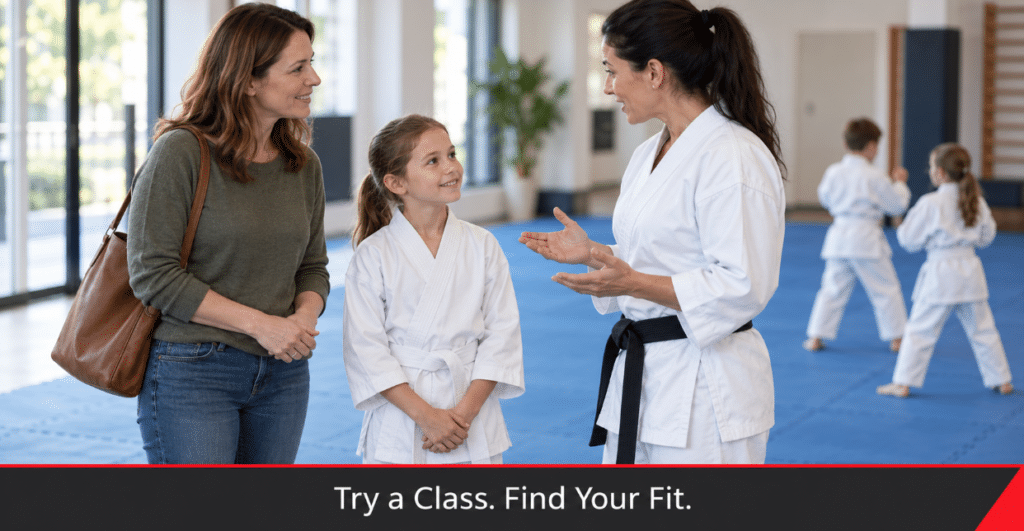
Your child might be excited to try martial arts, then feel shy when they walk into their first class. Let them watch, join in when they’re ready and see how they feel afterwards. They don’t have to decide on the spot.
Karate can be a suitable option for children who enjoy clear routines, learning movements and working towards gradual goals. Other styles can offer those opportunities too.
LBKI’s guide to kids’ karate in Auckland provides more information for parents considering karate.
Choosing for Yourself
Adults sometimes rule themselves out before visiting a class: “I’m too unfit,” “I’m not flexible enough,” or “I should have started years ago.”
A suitable beginner programme should let you learn the basics without expecting advanced fitness or technique. Tell the instructor about injuries, physical limitations or concerns about contact before joining. Think about practical details too. A class that fits your week and is easy to reach is more likely to become a regular habit.
You may discover a style you had barely considered. Watching or trying a lesson will tell you more than comparing promotional descriptions alone.
Trying Karate With LBKI
If karate interests you, contact Lion Budokan Karate International to discuss a suitable class in Auckland.
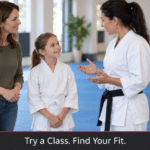
Explain what you hope to gain and ask how beginners are introduced to training. A first visit gives you a chance to meet the instructor, see the class and decide whether the approach feels right.
You do not have to settle the debate about which martial art is best. You need a place where you or your child can learn well and want to keep practising.
Frequently Asked Questions
Which martial art is best for beginners?
Karate, taekwondo, judo, BJJ and kickboxing can all accommodate beginners. Look for a class that explains the basics clearly and introduces exercises at a manageable pace.
Is karate better than taekwondo for self-defence?
Neither is automatically better. Their emphasis can differ, but the school’s teaching methods and self-defence content matter more than the name alone. Ask what students actually practise.
What is the safest martial art for children?
There isn’t one style that’s safest for every child. Watch a class and ask how much contact is involved, how partners are chosen and how closely the instructor supervises them. The exercises should suit your child’s age and experience. Even with careful teaching, injuries can happen.
Do I need to be fit before starting?
You do not need advanced fitness to join a suitable beginner class. Let the instructor know your starting point and any limitations so they can advise you.
Can we try different styles before choosing?
Yes, where clubs offer trial lessons or introductory sessions. Check what each visit involves, then compare how comfortable you felt, how clearly you were taught and whether you enjoyed the training.