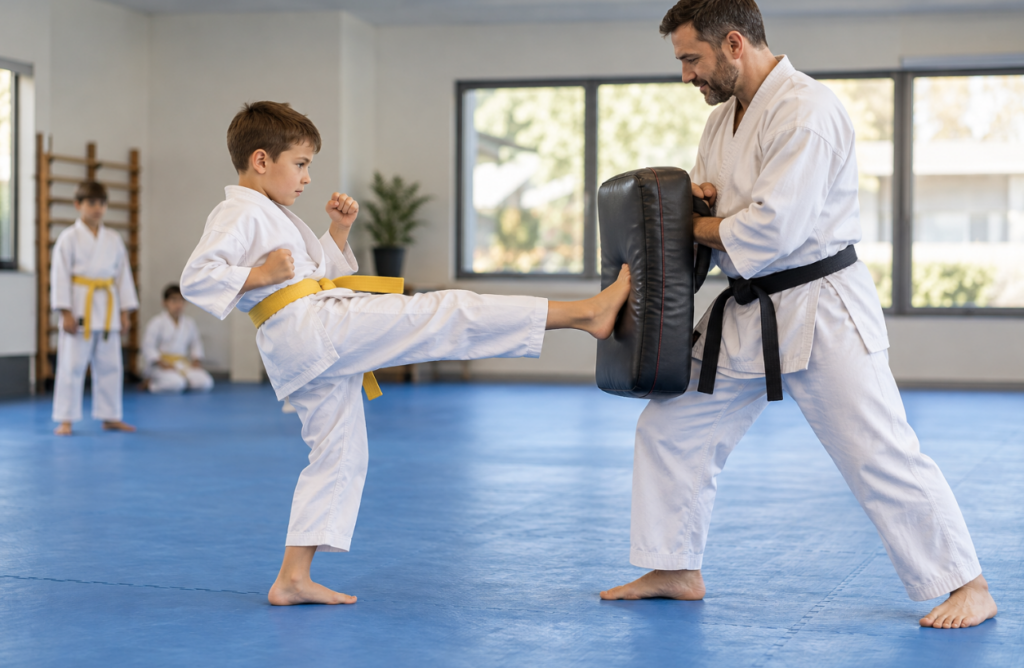
In a beginner karate class, something as simple as stepping backwards can take a surprising amount of practice.
A child might cross their feet, lean too far or look down to check where they are standing. The instructor makes a small correction, and they try again. Gradually, the movement becomes steadier. It may not look dramatic, but this is where practical learning begins.
Karate teaches children to coordinate their bodies, judge distance and control movements. These are foundations that can contribute to self-defence training. They take time to develop, and knowing a technique is different from being able to use it when frightened or caught off guard.
For parents wondering what happens beyond the punches and kicks, here is a closer look at the physical skills children work on.
Finding a Steady Position
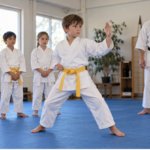
Before adding speed or power, children need to learn how to stand and move without losing their balance.
During stance practice, an instructor may adjust the distance between a child’s feet or remind them to bend their knees. A position that looks right can still feel awkward, especially for a beginner.
The next challenge is keeping that stability while moving. Children practise taking a step, changing direction and settling into another stance. This gives them a better understanding of their own balance. They begin to notice when they are leaning too far forwards or putting their feet too close together. That awareness provides a base for other techniques. Without it, even a well-rehearsed movement can be difficult to control.
Coordinating Hands and Feet
Watch a beginner learn a combination and you will often see their hands and feet working at different times. They might finish the arm movement before taking the step, or concentrate so hard on their feet that they forget what their hands should be doing. This is a normal part of learning.
Karate breaks movements into manageable parts. Children practise each part slowly, then bring them together. Over time, they work towards moving their body as a whole rather than treating every action as a separate instruction.
For practical self-defence training, coordination matters because movement rarely happens while someone stands perfectly still. However, classroom progress should never be presented as proof that a child can handle an unpredictable confrontation.
Learning How Far a Technique Reaches
Children do not always have a clear sense of distance when they start training. During a supervised exercise, they may stand too far from a target to reach it comfortably. On the next attempt, they might move too close and crowd the technique. With guidance, they learn to adjust.
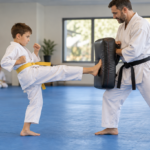
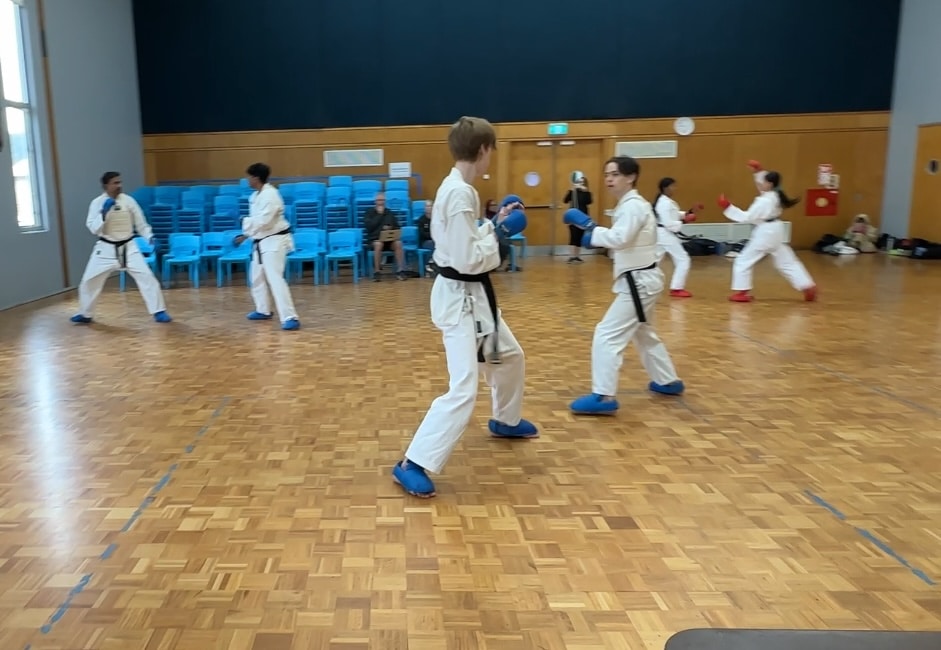
Where pad work is included, it gives children a specific target and feedback about their position. Partner exercises introduce another challenge: the person in front of them can move too. These activities help children understand reach and spacing. They also show why a technique cannot be judged only by how it looks when practised alone.
Practising Blocks and Defensive Movements
Basic blocking movements are part of karate training. Beginners usually learn the shape and direction of a movement before practising it in a more demanding exercise. There is plenty to think about: where the arm starts, where it finishes, how the body turns and whether the child remains balanced.
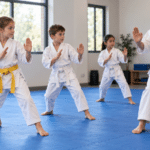
As lessons progress, instructors may introduce partner work to help students understand timing and application.
Parents should be cautious about claims that a particular block will always stop an attack. A rehearsed exercise has agreed conditions; a real incident does not. The value of practice is in developing movement and understanding, not giving children a promise of protection.
Controlling a Punch or Kick
A child learning a punch has more to work on than simply extending an arm. They need instruction on hand position, alignment and the coordinated movement of the body.
Kicks add another challenge: balancing on one leg while moving the other, then returning the foot to a stable position.
At beginner level, these details deserve attention before power.
Children also need to learn that different exercises call for different levels of force. Hitting a pad and practising with a partner are not the same activity.
Control means being able to follow the requirements of the exercise, including stopping when asked. It is an essential part of learning to train responsibly.
Getting Used to Timing
Knowing a movement and knowing when to begin it are separate skills.
In a simple partner drill, a child may act too early because they are eager to get started. Another may hesitate while trying to remember the sequence.
Repetition gives them opportunities to become familiar with the exercise. The instructor can change the pace or simplify the task when necessary. This is a useful reason to practise slowly. Speed can hide mistakes, while a manageable pace gives children time to understand what they are doing.
Timing develops through experience. It should not be confused with a guarantee that a child will react quickly in an emergency.
Understanding What Kata and Partner Work Offer
Parents may see children practising a sequence on their own and wonder how it relates to self-defence.
Kata; a set sequence of karate movements gives students a way to rehearse techniques, transitions and changes of direction. It also requires them to remember an order and maintain control throughout.
Partner work offers different feedback. Another person’s position, movement and pace affect the exercise. Both can contribute to karate learning, but neither should be described as a complete answer to children’s safety. Parents interested in practical applications should ask how the instructor explains and teaches them at each stage.
LBKI’s guide to karate for kids provides a broader introduction for families considering lessons.
What Progress Might Look Like
Early progress is often easy to miss if you are only looking for impressive techniques.
A child who previously stumbled during a turn may finish it steadily. Someone who rushed through an exercise may begin waiting until their partner is ready. A beginner might complete a short combination without looking around for reminders. These are useful signs of learning.
Belt progression can recognise development, but parents can also pay attention to the details: better coordination, more consistent control and a clearer understanding of instructions. Children will progress at different speeds. A movement that comes easily to one student may take another several lessons to understand.
Asking the Right Questions About Self-Defence Training
If self-defence is a main reason for enrolling, ask the school how it connects karate practice with age-appropriate personal protection.
Which applications are taught to beginners? How is contact managed? When do children begin partner exercises? What does the instructor explain about the limits of physical techniques? Those questions help you understand the programme beyond a general list of benefits.
For families exploring self-defence classes in Auckland, a conversation with LBKI and a trial lesson can provide a clearer picture of the training. You do not need to arrive knowing karate terminology. Explain what you want your child to learn, and ask the instructor to show you how lessons work towards it.
Frequently Asked Questions
Will my child start sparring straight away?
Ask the instructor how beginners are introduced to partner training. They should have time to understand the movements, contact rules and safety expectations before attempting more demanding exercises.
Why do children repeat the same techniques so often?
There is a lot to remember at first. Repeating a movement gives children time to work on their position and coordination without having to learn something new on every attempt.
Does a higher belt mean a child can defend themselves?
A belt recognises progress within the school’s grading system. It cannot tell you exactly how a child would respond in an unexpected situation.
Does my child need to be flexible before starting?
They do not need to arrive able to kick high. Beginners can work within their current ability, with guidance from the instructor.
What should I look for when watching a lesson?
Notice whether children receive clear corrections, whether partner exercises are supervised and whether students can ask for help. Those details tell you a great deal about how the class is taught.