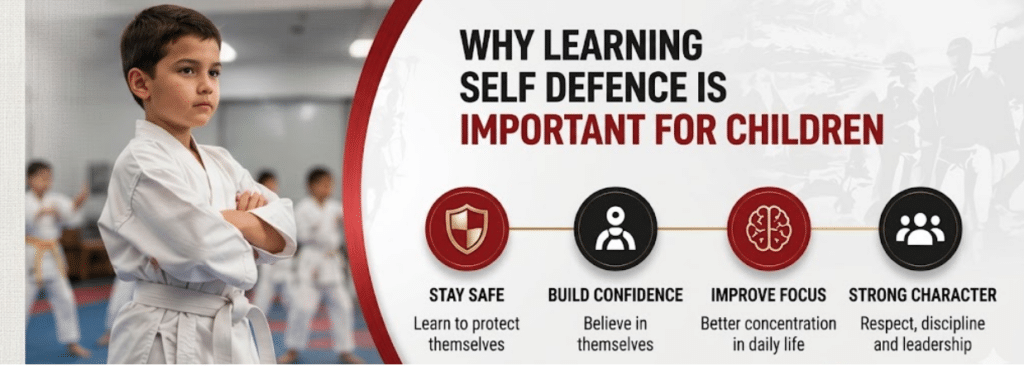
A child does not need to be fearless to feel more confident. Sometimes, being able to say “please stop”, walk away from an uncomfortable situation, or ask an adult for help is a meaningful step forward.
As parents, we cannot manage every interaction our children have. We can, however, help them understand personal boundaries and practise what to do when something feels wrong. This is where self-defence for children can help. Age-appropriate training can introduce practical skills while giving children a supportive space to build coordination, confidence, and self-control.
If you are considering classes in Auckland, it helps to know what children should learn and how these lessons can support them outside the dojo.

What Does Self-Defence Mean for Children?
Children’s self-defence should begin with awareness, communication and getting help. Physical techniques may be part of training, but avoiding harm comes first.
Depending on their age and the programme, children can practise how to:
- Recognise uncomfortable behaviour.
- Express a clear personal boundary.
- Create distance and move towards help.
- Tell a trusted adult what happened.
- Follow safety instructions during supervised practice.
These skills take time to develop. Knowing what to do in a calm classroom does not mean a child will always respond that way under pressure. Training should offer opportunities to practise without suggesting that children are responsible for preventing someone else’s harmful behaviour.
Learning to Speak Up About Personal Boundaries
Some children find it difficult to say no, especially to someone older, louder or more confident. They may worry about seeming rude or getting into trouble.
A useful starting point is helping children understand that they can speak up when another person’s behaviour makes them uncomfortable.
Simple phrases can be easier to remember than a long explanation:
- “Stop. I don’t like that.”
- “Please give me some space.”
- “I need help.”
Parents can practise these conversations at home without turning them into frightening scenarios. For example, ask what their child could say if someone repeatedly takes their belongings or keeps playing after they have asked to stop.
The aim is to help children express themselves clearly, then move away or seek support when necessary. They do not need to stay and win an argument.
Recognising When to Leave and Find Help
Awareness is easier to understand when it relates to everyday situations.
A child might notice that play is becoming too rough, someone is ignoring their request to stop, or they have become separated from their family in a busy place.
Rather than expecting them to judge another person’s intentions, teach a simple response. If they feel uncomfortable or unsure, they can move towards a trusted adult and explain what is happening.
It also helps to identify those adults in advance. At school, that might be a teacher or another staff member. At training, it could be the instructor. During an outing, families should agree on what to do if they become separated.
Children should know that they can ask for help even when they cannot explain exactly why something feels wrong.
Handling Bullying Without Pressure to Fight Back
“Just stand up for yourself” can sound straightforward to an adult. For a child facing repeated bullying, it may feel like another difficult task.
Child self-defence training should support a wider response that includes parents and school staff. A clear voice, creating distance and finding help may be useful, but persistent bullying requires adult involvement.
Encourage children to tell someone about repeated insults, threats, unwanted physical contact or other behaviour that makes them feel unsafe. If the first adult does not help, they should keep telling another trusted adult.
Most importantly, a child should never feel that being bullied means they weren’t confident enough or didn’t use their training correctly. The responsibility belongs to the person causing harm.
How Karate Can Support These Skills
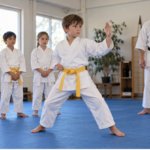
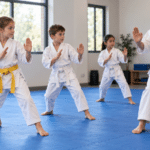
Karate gives children regular opportunities to listen, practise unfamiliar movements and work with others under supervision.
A beginner may need several attempts to learn a technique. They might forget a sequence, lose their balance or feel nervous about practising with a partner. With patient instruction, these moments can help them become more comfortable with making mistakes and trying again.
Confidence can grow from that experience: “I found this difficult, but I improved.”
Karate also provides a setting for learning control. Children practise following instructions, respecting training partners and understanding when a movement is appropriate.
However, karate programmes differ. Parents should ask how a school connects its training to children’s safety, including awareness, boundaries and seeking help. Physical ability alone does not guarantee safety.
For a broader introduction to getting started, read LBKI’s guide to karate for kids.
Choosing Kids’ Self-Defence Classes in Auckland
When comparing kids’ self-defence programmes in Auckland, look beyond the list of techniques or promised benefits; how children are taught matters just as much as what they are taught.
Ask how lessons are adapted for different ages. Younger children need simple instructions and easy activities. Older children might be ready for more detailed discussions and practice.
Notice how instructors treat beginners. Does a nervous child get patient guidance? Are mistakes corrected kindly? Children should feel comfortable asking questions without embarrassment.
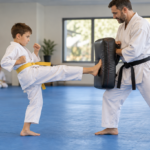
Check how physical practice is supervised. Ask about partner activities, contact levels, protective gear, and how children are taught self-control.
Find out what the programme teaches about avoiding conflict. A good programme should include leaving unsafe situations and getting help from an adult.
A trial lesson can give you and your child a clearer sense of the environment. Notice whether your child feels comfortable, understands the instructions and wants to return.

Supporting Your Child Between Lessons
You do not need to turn home into a training space. Short, relaxed conversations can help children connect what they learn with everyday life.
Ask questions such as, “Who could you speak to if something happened at school?” or “What could you do if someone kept ignoring your request to stop?”
Listen before giving advice. When children feel heard, they may find it easier to talk about tough experiences later. Praise specific actions, too. For example, saying “You told the teacher what happened” is more helpful than always telling them to “be brave.”
Taking the First Step With LBKI
The right class should give your child room to learn, ask questions and progress without pressure to appear tough.
If you are considering self-defence classes in Auckland, contact LBKI to discuss your child’s age, experience and what you hope they will gain from training. A first lesson is a chance to meet the instructors and see whether the approach suits your family. From there, progress can happen one manageable step at a time.
Frequently Asked Questions
At what age can children start learning self-defence?
Simple lessons about boundaries and asking for help can begin at home when children are young. Readiness for formal training depends on the programme, the child’s development and their ability to follow instructions. Ask LBKI about a suitable starting class.
Will self-defence training encourage my child to fight?
A responsible programme teaches control and prioritises avoiding conflict. Ask instructors how they explain the appropriate use of physical techniques and reinforce seeking help.
Can self-defence classes prevent bullying?
Classes may help children practise communication and build confidence, but they cannot guarantee that bullying will stop. Parents and school staff need to address repeated bullying.
Does my child need to be confident or sporty before starting?
No. Beginners come with different abilities and personalities. Look for a class where instructors help children join in at a pace that works for them.
What if my child feels nervous about the first lesson?
Let the instructor know ahead of time. Ask if your child can watch part of a class or start activities slowly. Knowing what to expect can make the first visit easier.